
PLASTIC’S VISIBLE — and INVISIBLE — DAMAGE
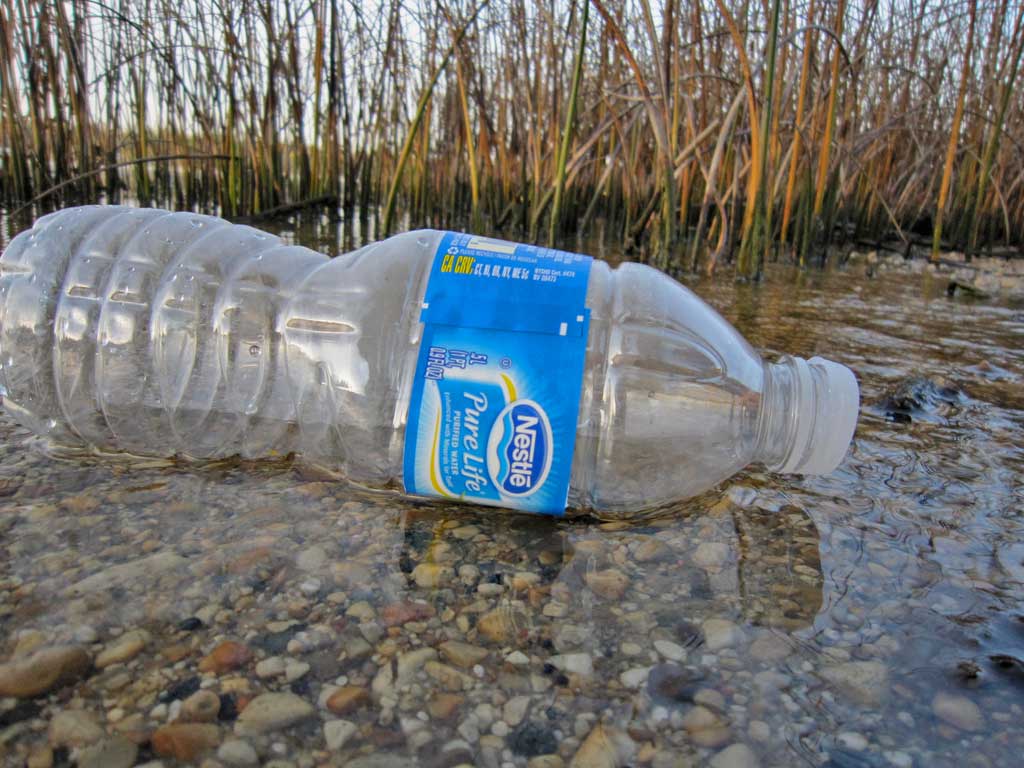
Throwaway plastic water bottles cause significant environmental problems. Many of these are obvious: Empty bottles generate litter in parks, beaches and other public places. They needlessly fill up our landfills, and worst of all, these virtually indestructible hunks of plastic end up polluting marine environments and creating “floating trash islands.” (photo below; see more at http://blog.modernature.ca/?p=90)

Coutesy of Rick Loomis, LA Times
Part of the problem is because plastic itself—polyethylene, polypropylene, nylon, Styrofoam, Saran—takes centuries to biodegrade. That’s why the amount of plastic floating in the world’s oceans has risen sharply since the 1950s. Currently, the average American uses—and mostly disposes of—some 223 pounds of plastic a year. That’s projected to increase to 326 pounds by the end of this decade.
But the larger issue with the widespread use of throwaway plastic water bottles is the impact the bottled water industry has on the resource itself. Just as the energy crisis in the 1970s changed people’s attitudes toward oil, Americans are becoming aware that fresh water is not an unlimited resource. Water is as vital as fossil fuels themselves for agriculture, manufacturing and electricity generation.
Meanwhile, major multinational bottling companies, such as Nestle, are buying up water rights around the world—including in numerous U.S. states—to supply massive bottling operations that often dangerously deplete local water supplies. From India to Latin American to Northern California, the manufacturers of bottled water threaten millions of people’s access to fresh, affordable water.
Facing the Facts
- Total U.S. water demand is projected to increase by as much as 12.3% by 2050, thanks to increased farm use, power plant cooling and consumption of bottled water. And thanks to climate change causing more frequent droughts to unprecedented flooding, more than one-third of all counties in the lower 48 states face potential water shortages by mid-century.
- Manufacturing disposable bottles and filling them with water—often drawn from underground aquifers that take centuries to recharge—takes 3 liters of water for every1 liter bottled.
- Two floating Pacific Ocean trash islands—made up of 90% plastic waste—are twice the size of Texas. When a yachting skipper tried to take a “shortcut” through one of them, it took seven days of sailing until he hit open ocean again.
What You Can Do
The easiest way to positively impact the ecological damage done to the environment—especially the oceans—from the use of plastic beverage bottles is to stop buying and consuming water in disposable containers. Download the Tap Buddy app and take the pledge to drink only tapwater from now on.
See our Resources page for more information and organizations mobilizing to deal with the bottled water crisis.
“We do not inherit the earth from our ancestors, we borrow it from our children”. ~ Native American Proverb
 H2O-No Plastic!